Automatic translation is not available for this article yet — showing the original text.
Introduction
Hello, friends of Avaliasom! I'm Marcelo Dosec, and the IEM I'm bringing you today is the CVJ Tenhawk, which was kindly sent to me by the folks at Sonether. Thank you very much, my friends!
The CVJ Tenhawk—whose Chinese name is 轩卓 (Xuan Zhuo)—is a recent release from CVJ that moves away from the waifu theme and brings something a bit more poetic, described in the brand's leaflet as an ode to the color of paradise and the heart of the craftsman. In practice, the box features an image of a gorgeous black bird that is very pleasing to the eye. It retails for around $40 USD before taxes.
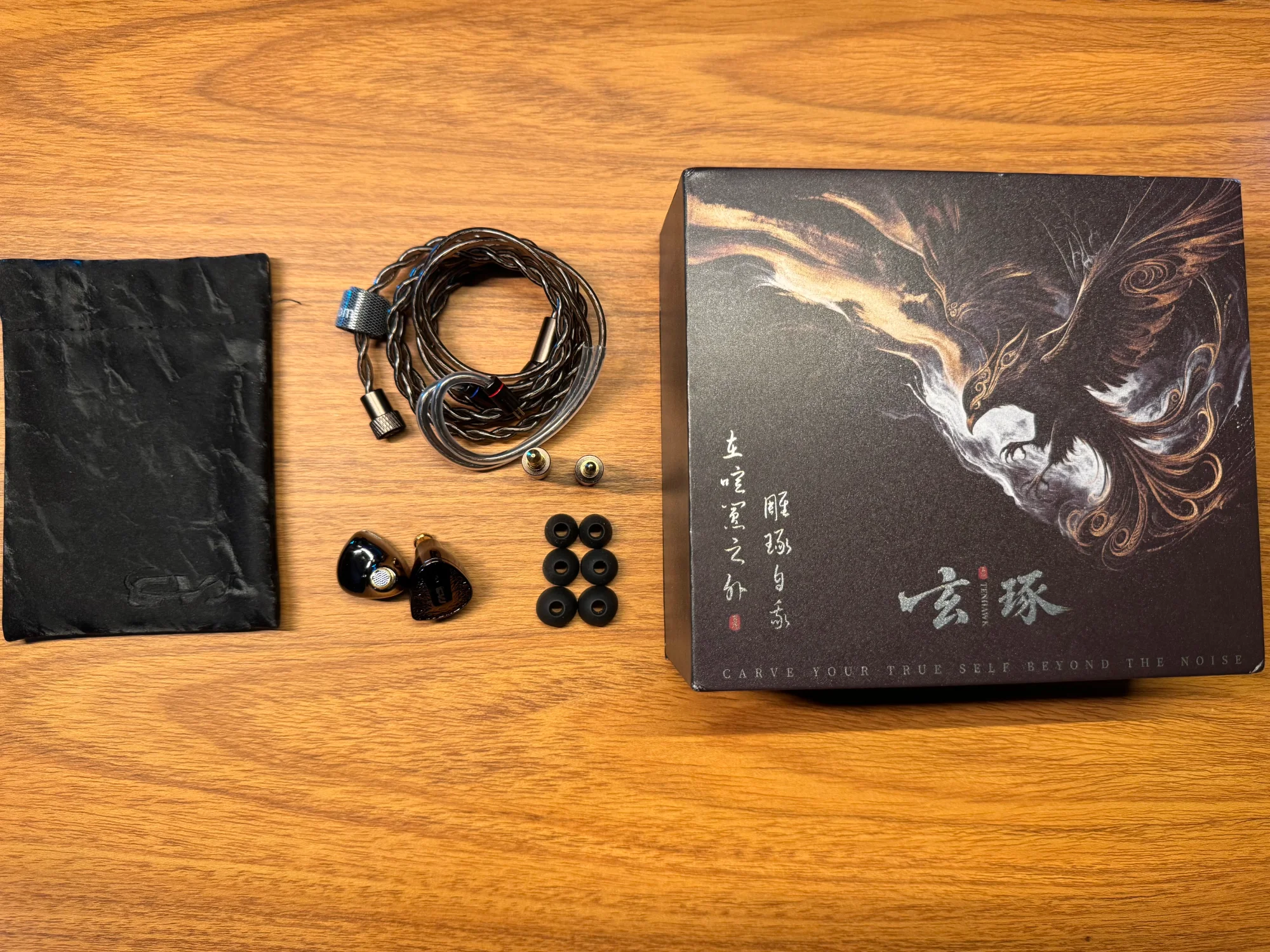
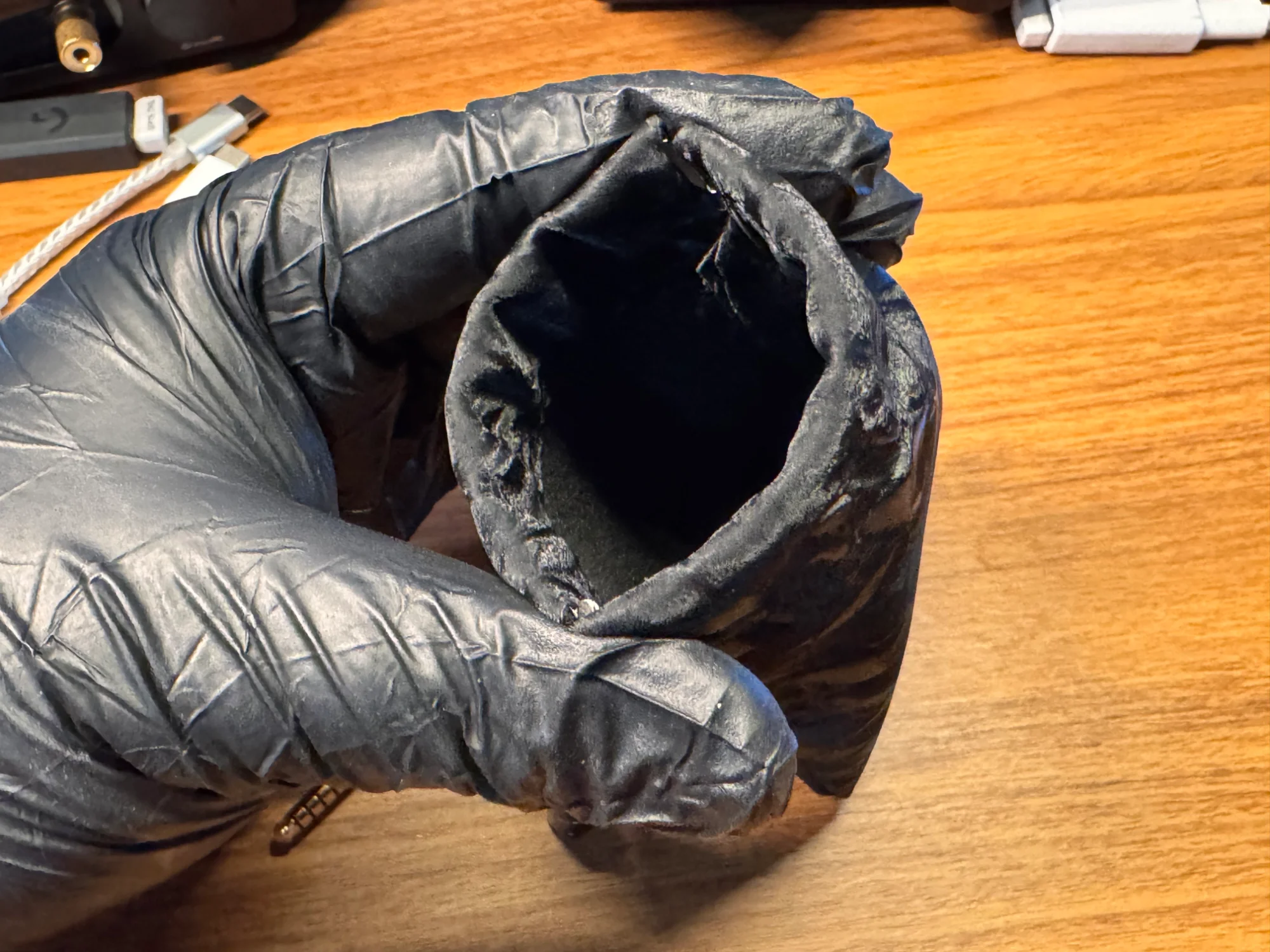
By the way, the unboxing experience is just as interesting as the box itself, and I invite you to check it out. One highlight of the unboxing is the texture of the carrying pouch, whose fabric changes its appearance depending on how the light hits it.
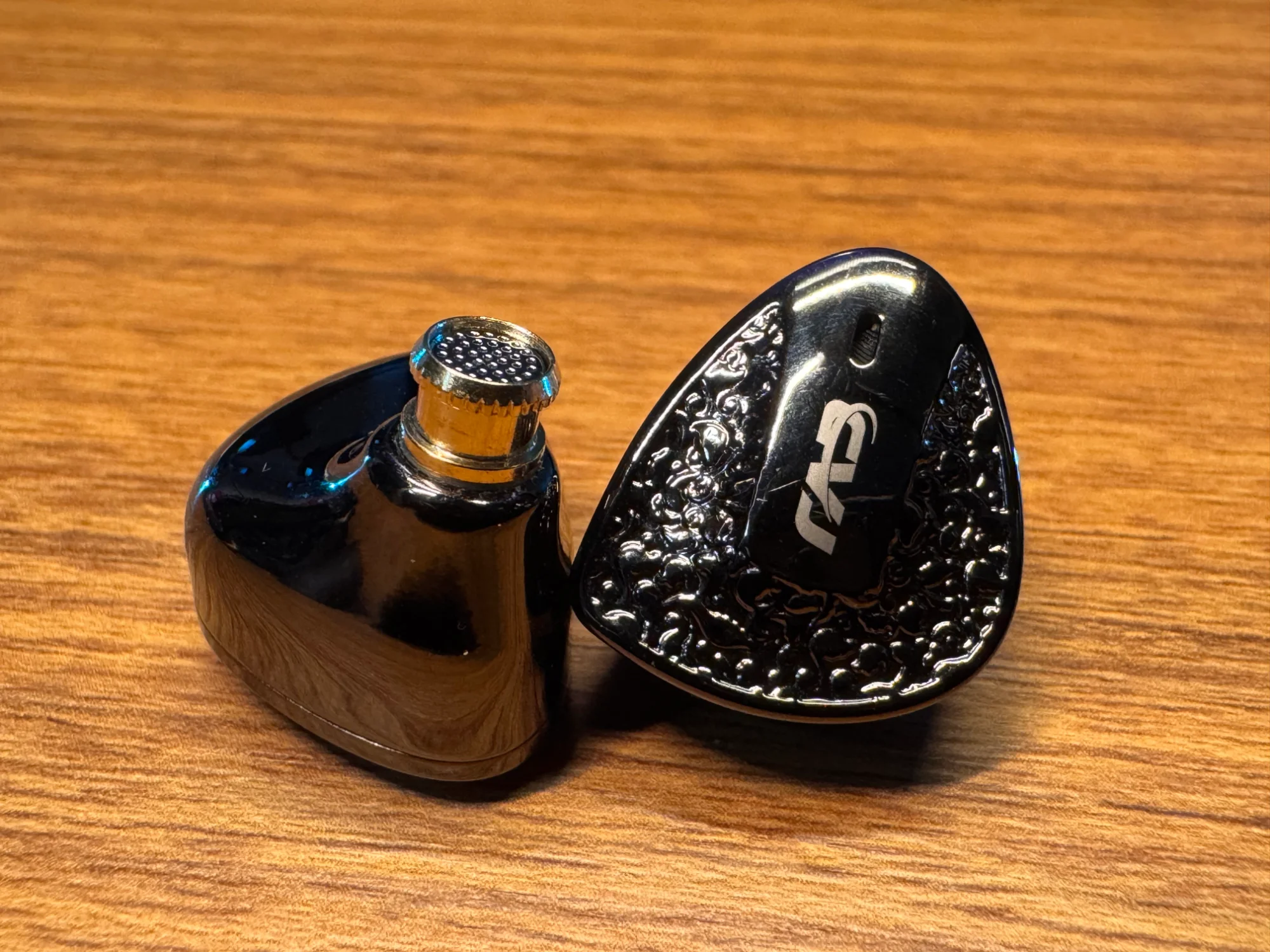
The earphones themselves live up to the packaging, featuring a full-metal body with impeccable build quality. The shell is rounded with no sharp edges, and the faceplate has a gravel-like texture surrounding the CVJ logo and a single vent hole. Its nozzle is also made of metal, fitted with a fairly restrictive mesh filter at the tip.
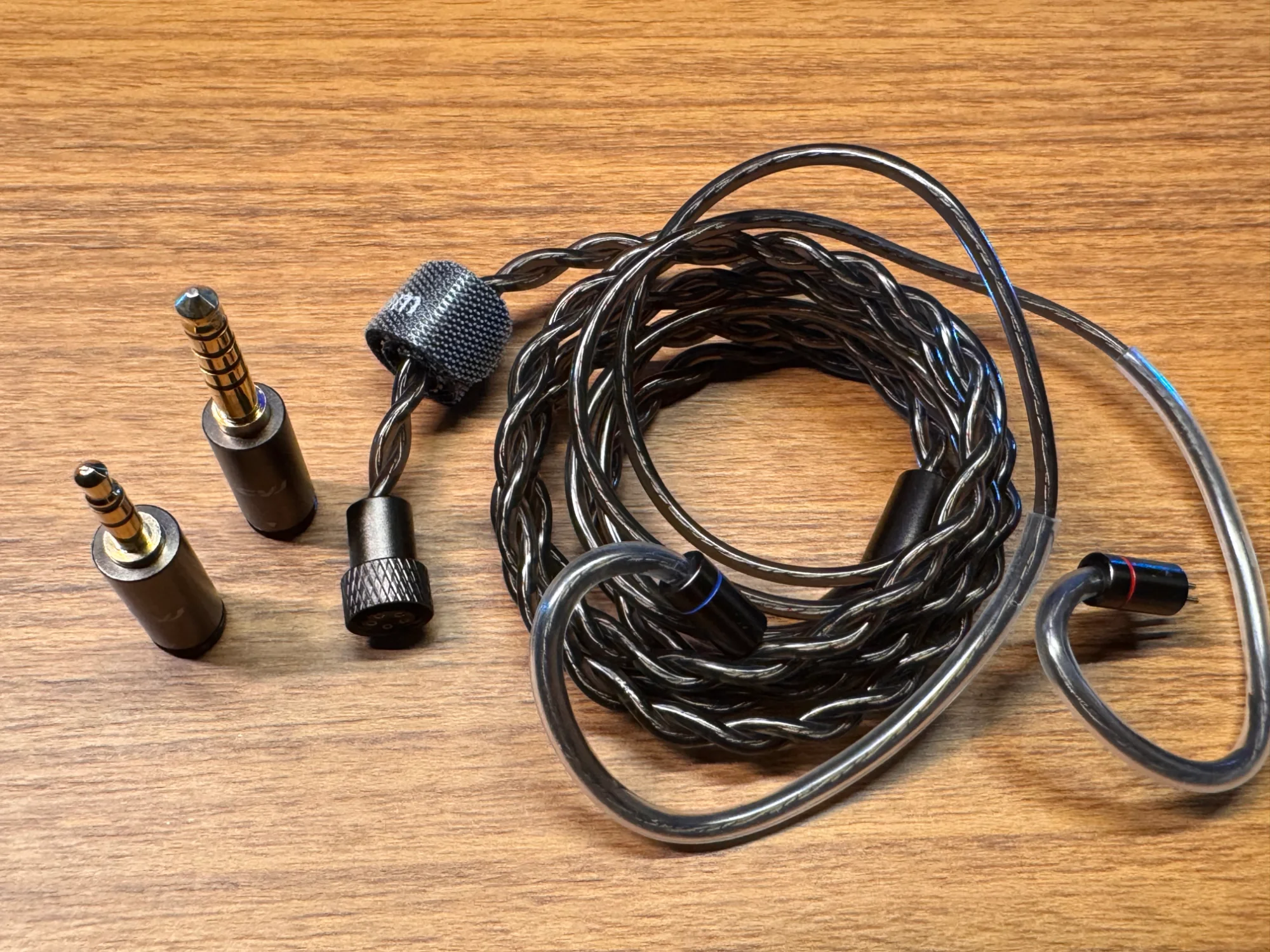
The cable is a handsome piece of silver-plated copper, complete with a splitter, chin slider, and all-metal terminations. It offers great suppleness with no tendency to tangle, weighing 22.6 g and measuring 1.20 m in length. It uses 0.78 mm 2-pin connectors on the IEM end and a modular plug system on the source end. My unit came with 3.5 mm and 4.4 mm terminations, though there are also options for a USB-C termination as well as the same cable with an inline microphone.
Sound is produced by a 12 mm dynamic driver with a beryllium-plated diaphragm.
Comfort & Fit
When it comes to comfort—keeping in mind that this is a very subjective area—the CVJ Tenhawk fit my ears well thanks to its ergonomic shell and lack of sharp edges.
Technical Specifications
- Length: 22.4 mm
- Width: 18.7 mm
- Depth (nozzle to faceplate): 21.2 mm
- Nozzle diameter: 5.6 mm
- Weight: 13.5 g per earpiece
Because it is a vented design, there is no sensation of ear pressure or occlusion. The insertion depth is shallow to medium, and passive isolation is very good. It only includes one set of basic ear tips; while they aren't uncomfortable, they don't grip the skin inside the ear canal particularly well.
Sound Performance (Music)
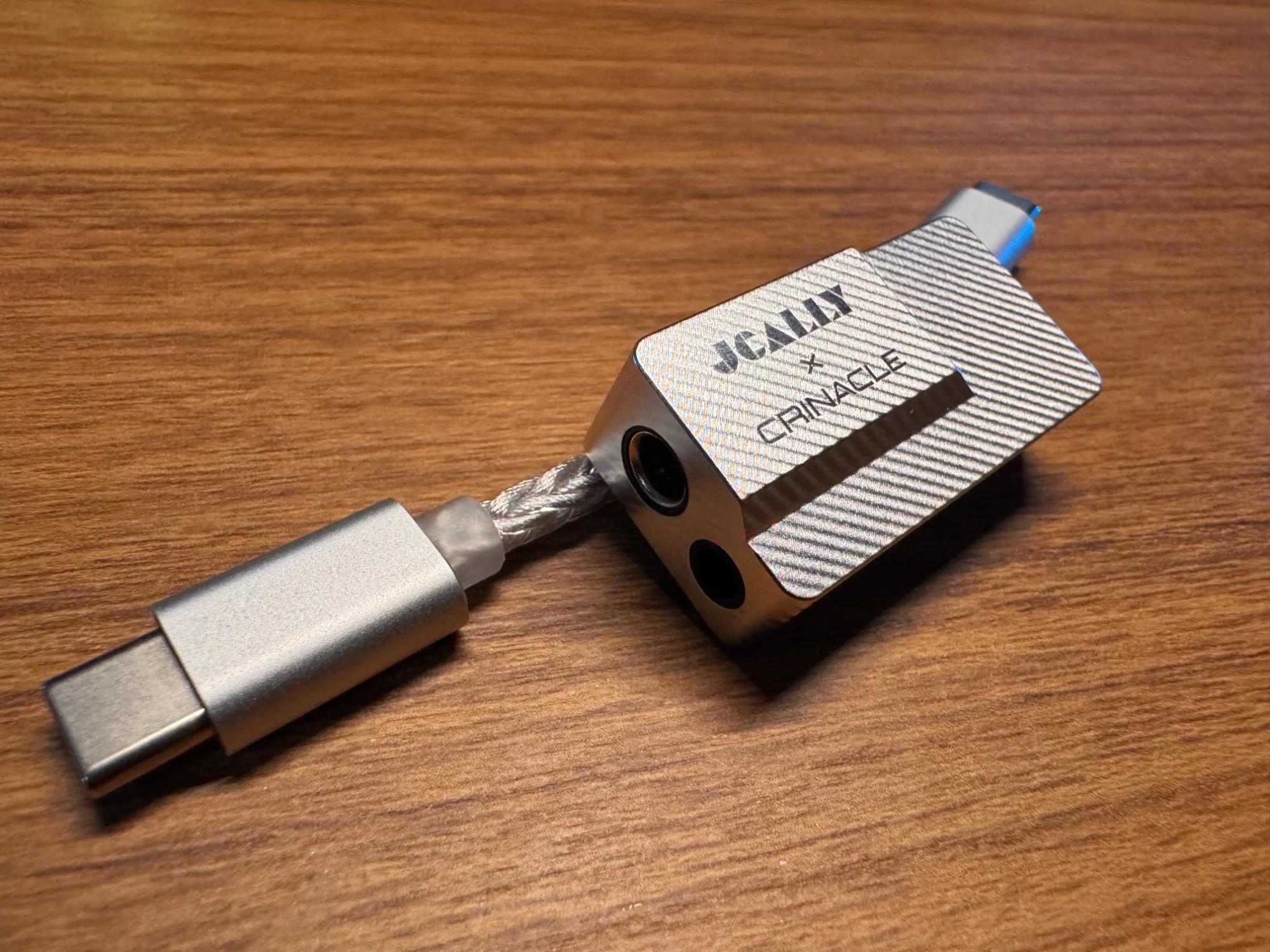
I tested the Tenhawk using the following sources: Apple Dongle, Jcally AP6, Topping DX3 Pro+, iFi Hip-Dac 3, and FiiO K13 R2R.
The Tenhawk is easy to drive from any source and doesn't show significant gains from power scaling—the differences between sources come down solely to their individual sound signatures.
💡 O que é isso? Listening Volume Note
I listen to my IEMs at low volumes. My impressions, especially regarding bass and treble intensity, will likely differ from those who listen at higher volumes.
To my ears, the Tenhawk's sound signature sits somewhere between warm-neutral and a warm U-shape.
- Bass: Starting with the low end, the Tenhawk delivers fast, well-defined, well-articulated, and punchy bass with plenty of physical impact. There is more weight in the mid-bass than in the sub-bass, though it still reaches deep down into the audible spectrum. Listening to "I Want You Back", it renders the bassline with great presence without masking the kick drum at the beginning of the track. It's a very visceral low end that pairs well with EDM and Pop, shines on Apocalyptica's cellos, and has plenty of speed to keep up with progressive metal.
- Mids: The midrange carries a healthy dose of warmth—a bit more than I personally prefer, actually. Male vocals sound rich and authoritative, as do the lower notes of acoustic guitars. These mids worked nicely with Maria Gadú's textured vocals, adding good note weight overall, including on plucked strings. For my taste, the mids could use a little more clarity and air. On the flip side, this makes it a very safe set for those sensitive to upper-mids; a track like Evanescence's "Hello" is unlikely to ever sound sibilant here.
- Treble: In the treble region, I really enjoyed the cymbal attack on "September in Montreal", though the decay drops off early and lacks air for my personal treblehead preferences. Violins have good body and presence, but they also roll off a bit too soon. Here's hoping for a "Tenhawk Pro" down the line with a Knowles BA for the upper treble, or something along those lines.
- Technicalities: Technically, the Tenhawk shines in its soundstage, which is quite wide and holographic. Imaging is very good, and instrument separation deserves applause. Layering and resolution are also great for the $40 price bracket, while micro-detail retrieval is simply good, without standing out.
In terms of musical genres, the Tenhawk would be my go-to pick in this price range for Blues or Jazz, and perhaps EDM with heavy, hard-hitting beats.
Everyday Use
The Tenhawk is a great choice for daily use. Its metal chassis is sturdy, isolation is solid, and the rounded shell rests comfortably in the ears without causing fatigue. There are no exposed vents that sweat can easily seep into, making it a solid option for the gym or even as a stage monitor.
For movies, TV shows, and general media, it delivers massive rumble during explosions without drowning out dialogue. For work or study, it reproduces voices competently, even during crowded meetings with multiple people speaking at once.
Gaming Performance
For gaming tests, I used the Fosi SK02 as my source.
- Competitive FPS (CS2 & similar): The Tenhawk renders footsteps well, though its elevated bass means explosions or deeper voices can slightly mask footstep cues.
- Battle Royale (PUBG): Spatial awareness is commendable, accurately projecting the direction of gunfire and enemy footsteps, including verticality.
- Open-World & Casual Games: The Tenhawk provides great immersion, pairing booming explosions with a wide soundstage. I used it plugged into a PS5 controller while playing GTA VI and had a very satisfying experience.
- Simulation Games: Finally, its punchy low end makes it an excellent choice for sim games—I'd easily rank it as my favorite set under $40 for this genre.
Comparisons
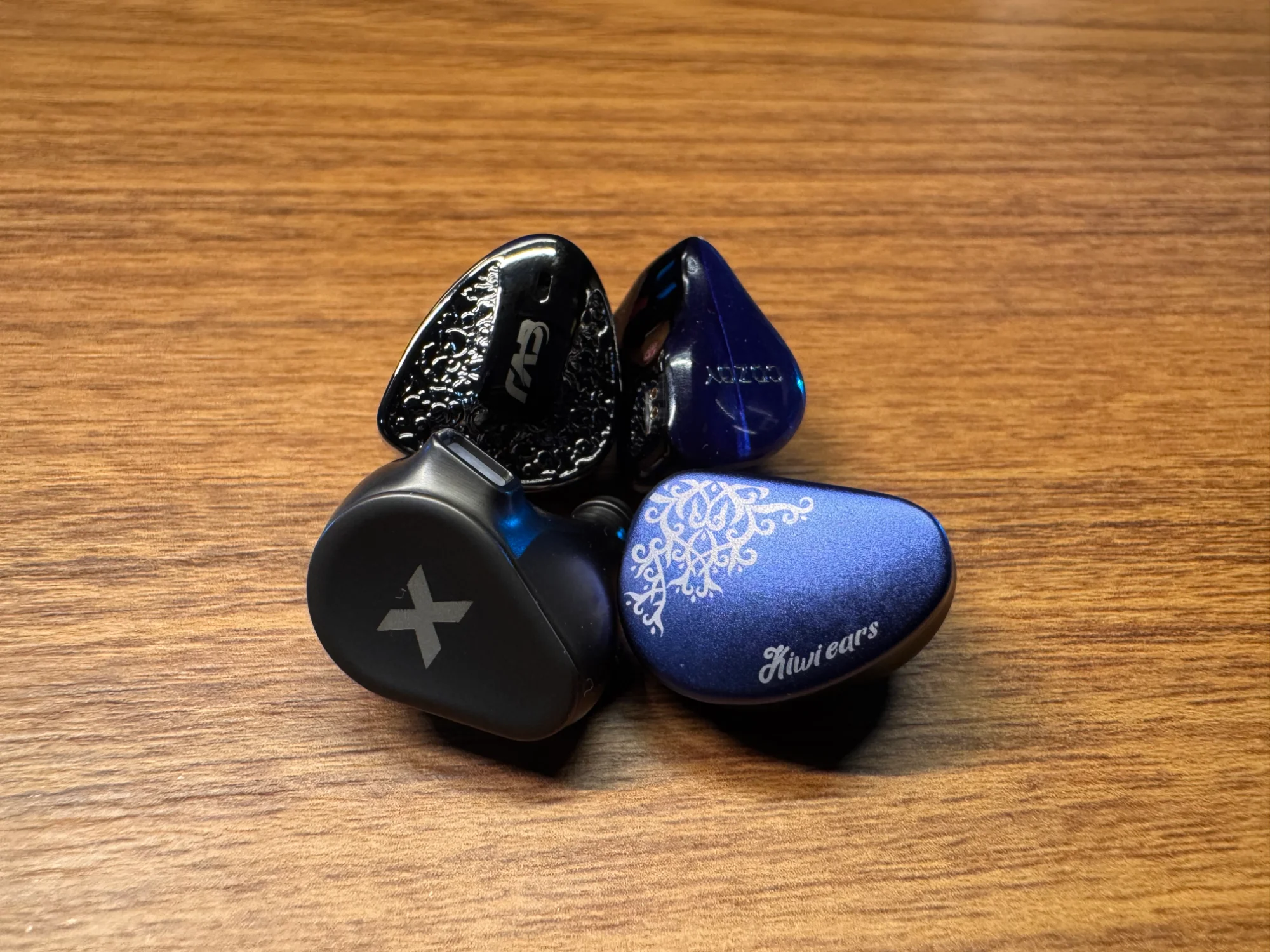
In the $40 USD bracket, the Tenhawk is the ideal pick for those looking for a bit more warmth:
- vs. Dunu Titan X: The Tenhawk offers a more refined sound and better-textured bass, though it falls behind if you're specifically looking for a gaming-focused IEM.
- vs. Kiwi Ears Cadenza II / Cozoy D1: The main difference comes down to tuning—more neutral on the Cadenza II and D1, and warmer on the Tenhawk. My personal pick would be the Cadenza II because of its treble extension, though choosing between the three is purely a matter of preference, as they are evenly matched in technicalities and build.
Conclusion
The CVJ Tenhawk is a very interesting IEM. It is one of the few sets in this price range to offer a warmer signature, delivering a safe, pleasant sound that should appeal to the vast majority of listeners—save for the occasional picky treblehead like myself.
About the author

AvaliaSom
Avaliações com nota por critério: graves, médios e agudos (tonalidade) e palco, imaging, detalhes e separação (tecnicalidades), além de construção, testes de volume, jogos e filmes. Planilha atualizada desde 2022.