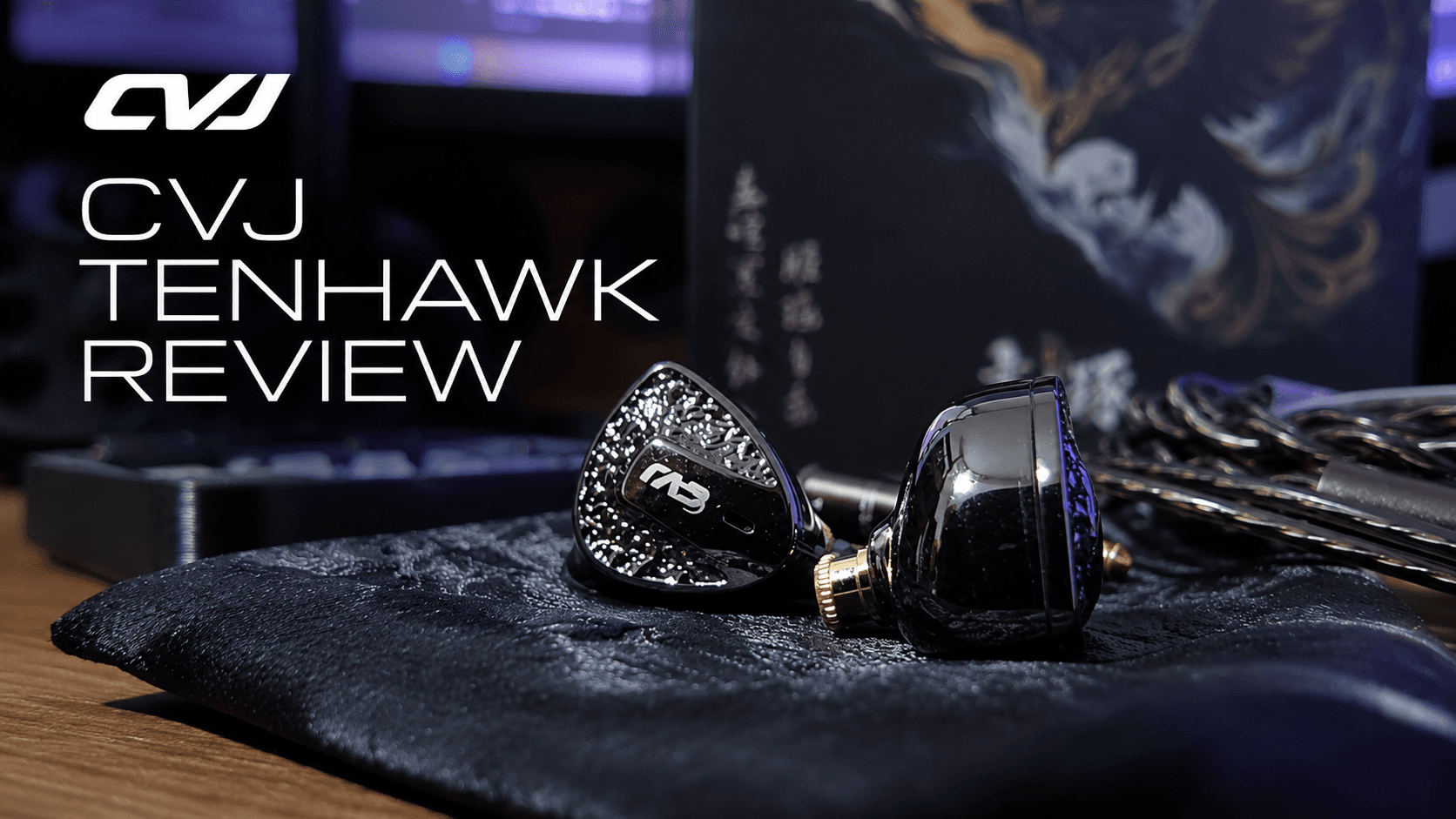
We don't have time for small talk here, so let's get straight to the review! The Tenhawk is CVJ's $36 "neutral-warm" release (approximately R$200 including taxes).
Design and Build
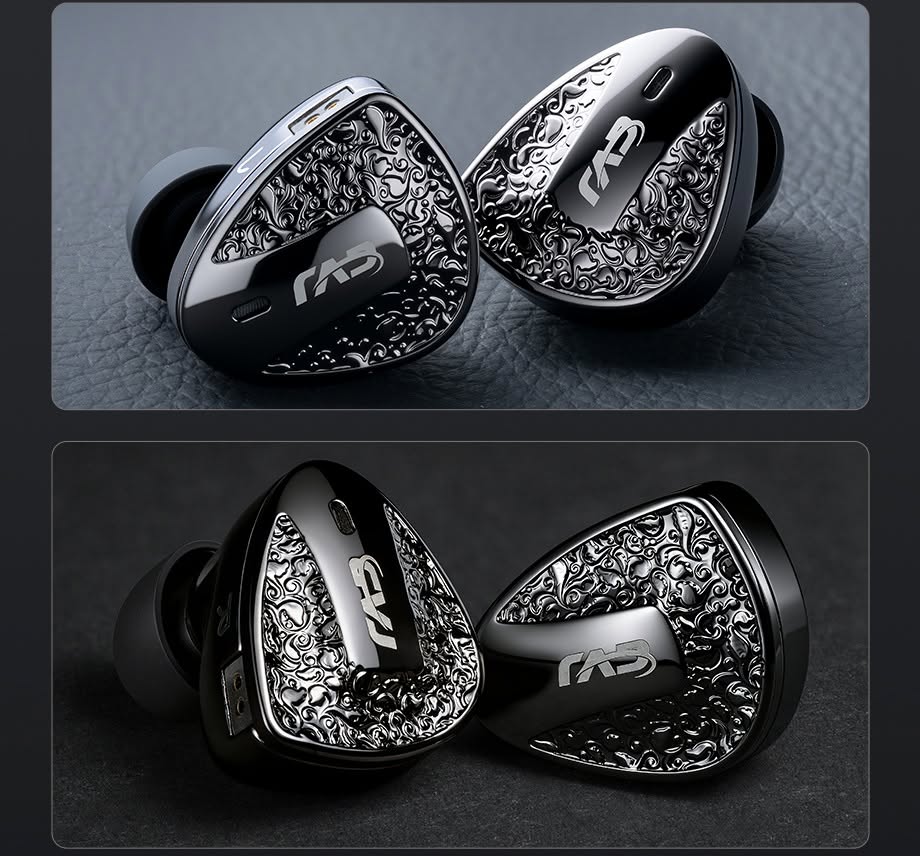
The Tenhawk features a single beryllium dynamic driver. Its metal shell feels very solid and gives it a premium feel in hand. The design is quite understated, featuring nothing more than a raised artwork on the faceplate, but no waifu art. That's a good thing, as it offers another option for those looking for a quality IEM without an anime girl at this price point.
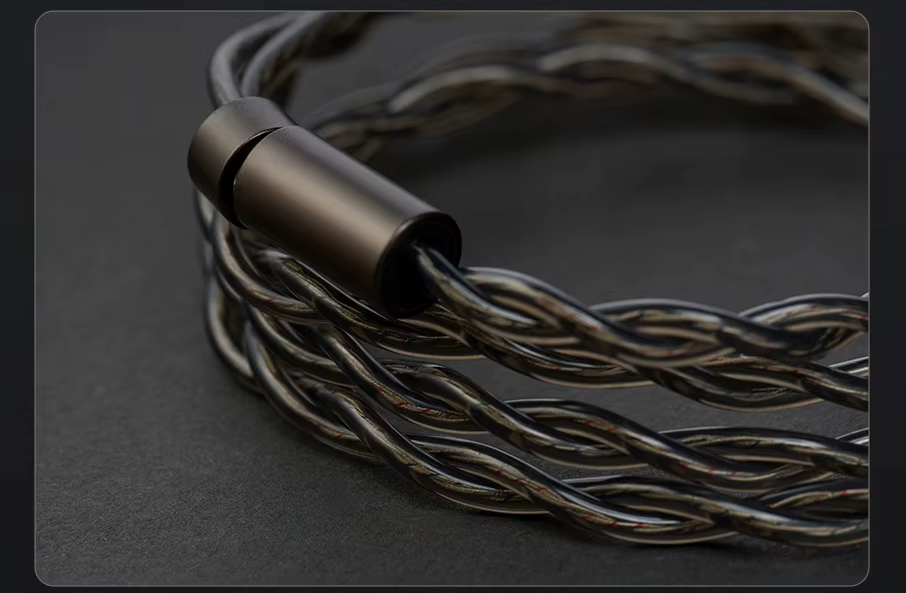
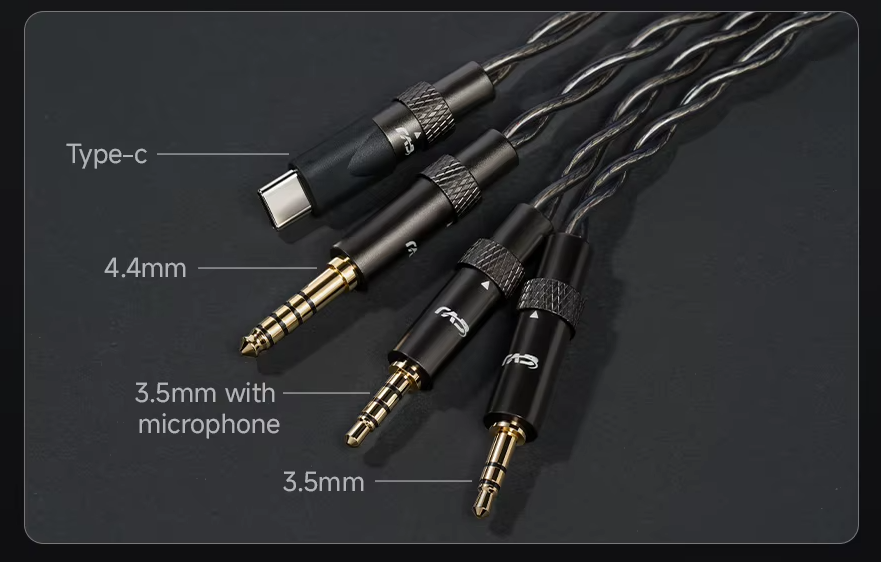
The included cable is well built, but I wasn't particularly fond of its appearance or feel. It's made of smooth plastic, so it tangles fairly easily. On the bright side, it's a modular cable, and depending on your choice, it comes with either 3.5mm and 4.4mm balanced terminations (mic-free version) or 3.5mm and USB-C (mic version).
It also comes with 3 pairs of standard silicone ear tips and a very classy velvet pouch. It's a shame the pouch is so small, making it difficult to carry the IEM in it.
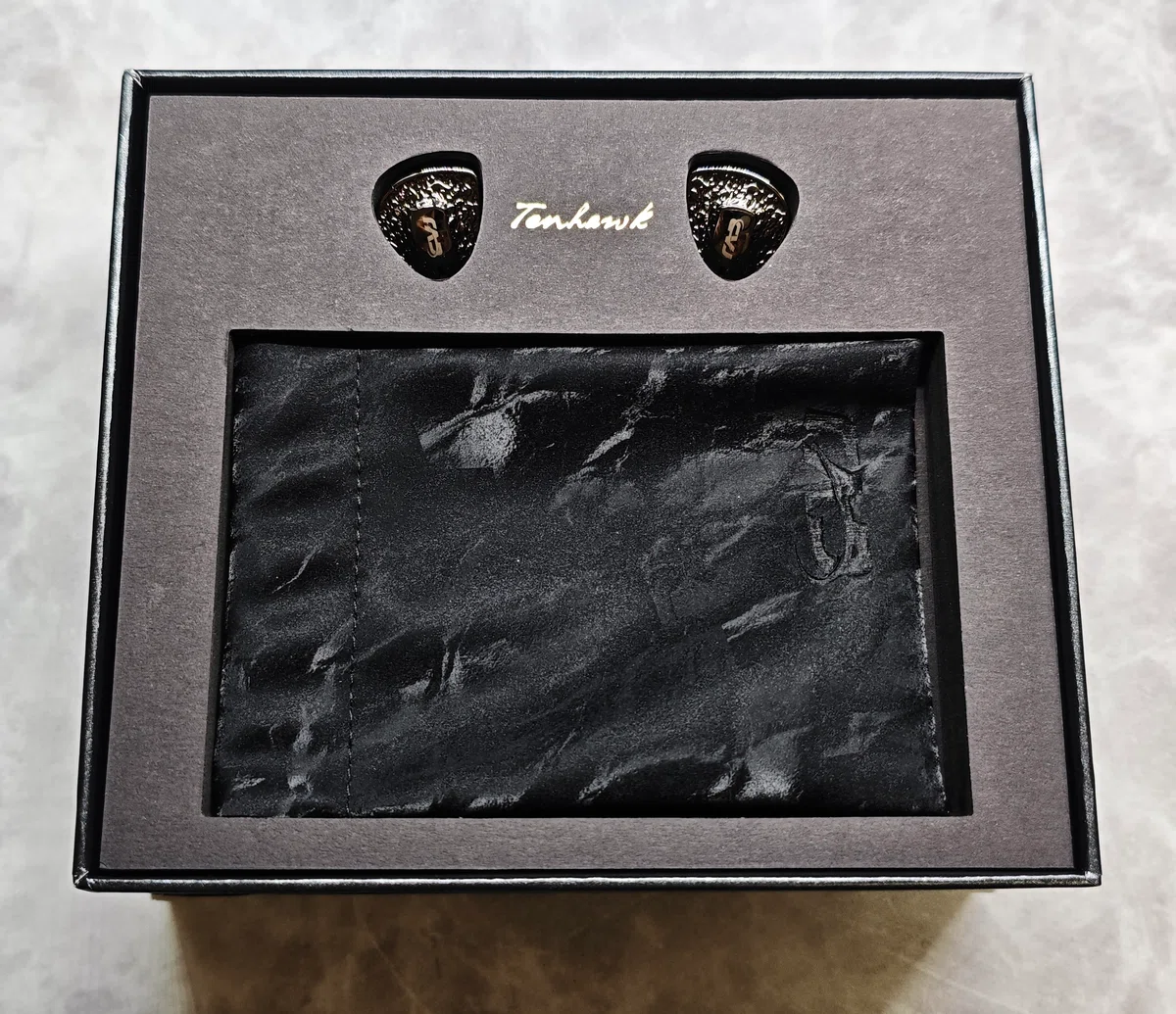
The initial fit was poor with the stock ear tips. Switching to the medium DUNU S&S tips made a huge difference, and those were the tips I used for all my testing.
Testing Conditions
Wired via Fosi ZH3 and Snowsky Retro Nano
Bluetooth via TRN BT20 Pro
Sound
The CVJ Tenhawk follows a neutral-warm tuning, delivering a very pleasant presentation that prioritizes natural-sounding mids. It manages to provide weight and impact in the low frequencies without compromising the reproduction of other instruments, all while maintaining a cozy tonal balance that works very well for long listening sessions.
Bass
The bass is well balanced, with a boost covering both sub-bass and mid-bass. There's enough impact and weight to give the presentation some fullness, but without excessive emphasis that ends up taking over the rest of the spectrum.
The result is a present and enjoyable bass region that gives music body without compromising the overall organization. Apeshit by The Sound of Animals Fighting is a great example: even with the amount of information and intensity in the track, the bass fills out the sound without pushing the mids out of the way. Of course, given how complex and dense the recording is, an IEM at this price can still get a little congested at times, but its performance on Apeshit genuinely surprised me in a very positive way.
I'd like a little more texture and definition in this region, but considering the price bracket, the performance is excellent.
Mids
Delicious. That's the best way to sum up this region.
Listening to instrumental music on this IEM almost feels like a sin, considering how well it reproduces vocals. Regardless of register, from lower-pitched voices to higher ones, the Tenhawk manages to deliver a very natural tonality, with vocal separation that's impressive for its price range.
In Moth by Audioslave, the intro drums grab your attention with their impact, but it's the vocal reproduction that really shows what this IEM can do. There's a very pleasing naturalness to it, without losing body or presence.
In Mask by Aqua Timez, meanwhile, the combination of vocals and bass is engaging without losing separation, while the bass provides a solid foundation for the song without stealing the spotlight.
This is a region that doesn't need to resort to exaggeration to stand out. The tonality and its ability to separate vocal elements do practically all the work.
Treble
Treble is what I consider the Tenhawk's weakest point, although this is much more a matter of personal preference than an actual technical shortcoming.
Compared to the IEMs I'd been using before receiving it, my first impression was that it sounded dark. Now that I've had more time to adjust, I can better appreciate it as a neutral-warm IEM with a very conservative high-frequency presentation.
I'd still like a little more sparkle, especially in the reproduction of cymbals. CVJ seems to have preferred playing it safe rather than going overboard, resulting in a treble region that's unlikely to cause discomfort but also doesn't deliver the extra "spice" I'd like to hear.
As a consequence, perceived detail retrieval takes a bit of a hit, especially when compared to more open and brighter presentations. On the other hand, this choice contributes to the set's cozy tonality, allowing for long listening sessions without the fatigue caused by high frequencies.
Technicalities
The Tenhawk's soundstage isn't particularly expansive, but it's far from claustrophobic either. The presentation has reasonable dimensions and doesn't give you that feeling that everything is crammed into the same space.
Once again, separation is the main highlight. This becomes especially apparent in songs with multiple vocal lines, where the IEM manages to position each element in its proper place, preventing information from overlapping.
It's a quality that complements the midrange tonality very well. The ability to distinguish different voices, instruments, and layers of the mix keeps the presentation well organized, even when there's a lot happening at once.
Another interesting aspect is its ability to remain engaging at lower volumes. The Tenhawk manages to preserve a good amount of impact and body without requiring you to turn the volume up significantly. Even as background music while I'm doing other things, it maintains a very pleasant and engaging presentation.
Verdict
If you like the AFUL Explorer, for example, go for it without hesitation. The Tenhawk costs less than half as much as an Explorer and, in my opinion, the only area where it falls short is fit. Its sound is less dark and more comfortable, turning the veiled experience I get with the Explorer into something merely relaxed, where everything is still there and you're not sacrificing detail or overall tonality just to avoid treble discomfort.
Rating: Rank B
A great addition to a beginner's collection, or a solid choice if you already know you enjoy this kind of tonality. Unfortunately, I can't recommend it as someone's only IEM when they're just entering the hobby, because I believe that when you only have one IEM, versatility and an all-rounder approach should be priorities. The Tenhawk doesn't perform poorly in any situation, but it has a clear purpose (and executes it exceptionally well) that isn't to be "your only IEM." Still, it's an easy recommendation for anyone who already knows they don't enjoy much treble and is looking for something more forgiving as a daily driver.
Disclaimer
The Tenhawk was sent to me by CVJ through Sonether, but the opinions expressed here are my own, and no conditions were imposed on receiving the product.
About the author